
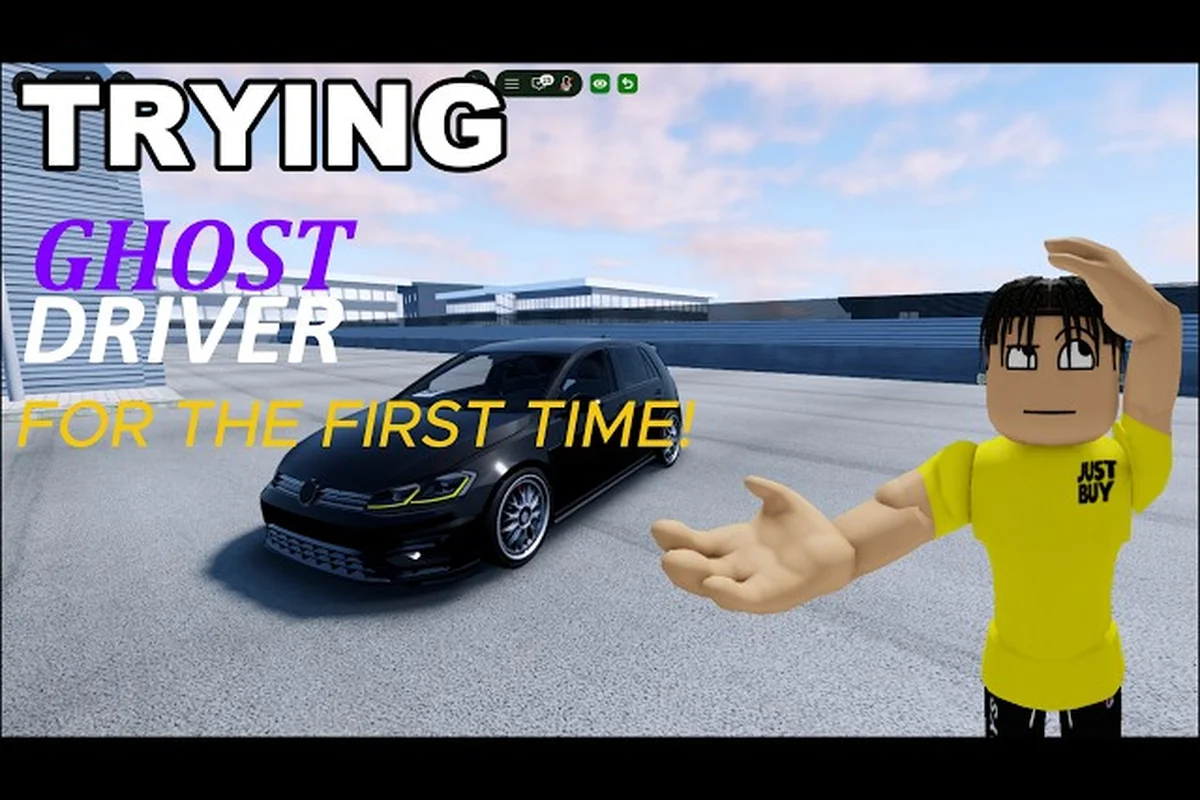
Ghost Driver getting started is simpler than it looks, but only if you know exactly what to prioritize in your first session. This Roblox traffic-cutting experience from Tilted Vehicles has already pulled in over 901,000 visits since its May 2026 launch, and the pre-alpha build rewards players who learn the core loop early. Your first steps determine how quickly you climb from a stock sedan to the dealership's top-tier machines, so this ghost driver gameplay guide walks you through the essential decisions in order. You'll learn what to do first, how to read the highway, and which upgrades actually matter when you're learning to drive through dense traffic.
Ghost Driver First Steps: Setting Up Your First Run
Before you even touch the throttle, your ghost driver first steps should cover three things: controls, camera, and expectations. The game uses W/A/S/D or Arrow Keys to steer, Shift for the handbrake, V to cycle cameras, and L for headlights, according to the official Ghost Driver Roblox page. That layout is your entire toolkit, so spend two minutes in the menu confirming your muscle memory before entering traffic.
Your first run is about survival, not style. The highway throws dense traffic at you immediately, and the pre-alpha build has no tutorial to hold your hand. You will likely total your starter sedan within the first two minutes if you try to match the speed of the AI traffic, so your only goal is to keep the car between the guardrails and avoid triggering the collision physics that send you into a spin. Here is what your opening session should look like:
-
Pick the default car — the starter sedan handles predictably and forgives small mistakes
-
Set the camera to chase view — press V once so you can see the full width of your car
-
Drive at 60-70% throttle — full speed feels tempting, but reaction time matters more
-
Focus on one lane change at a time — weaving through three lanes instantly is how you crash
The game's core loop is straightforward: cut through traffic, build a combo, earn cash, buy a better car. Community reports from the first-impression video by ImSincero confirm that new players who survive their first five minutes without a crash learn the traffic-reading rhythm much faster than those who restart constantly.
How Progression Works in Ghost Driver
The ghost driver gameplay loop revolves around risk versus reward, and understanding that balance is what separates players who progress from those who rage-quit. Every near-miss you thread through adds to your combo multiplier, which directly increases your cash payout at the end of the run. But every crash resets your combo to zero and costs you precious time.
The progression path follows a clear hierarchy, and knowing where you're headed helps you make smarter decisions early: you'll start with Basic Training to unlock the first three districts, then graduate to Free Drive to grind out the 50 required miles for your Class C license, and finally tackle the Highway Trials that gate access to the Ghost Driver's signature 200-mph pursuit mode. Each tier isn't just a difficulty spike—it's a mechanics gatekeeper. Free Drive, for instance, is where you'll master the drift-assist toggle and learn to read traffic density on the radar, skills that the Highway Trials will punish you for skipping, since a single failed overtake at speed costs you a full respawn cycle and sets your progression timer back by roughly two minutes.
| Progression Stage | Primary Goal | Typical Session Length | Key Skill to Develop |
|---|---|---|---|
| First Session | Survive 3 minutes without crashing | 5-10 minutes | Lane discipline |
| Early Grind | Earn first 5,000 cash | 15-20 minutes | Combo building |
| Mid Game | Buy first upgraded car | 30-45 minutes | Traffic gap reading |
| Late Game | Unlock Porsche-tier vehicles | 60+ minutes | Sustained high-speed weaving |
The combo multiplier is the single most important mechanic in the game. Each successful close pass adds to your chain, and the multiplier scales your cash earnings exponentially rather than linearly. This means a single clean run with a 20x combo is worth more than five cautious runs with no combo at all.
Your first major purchase should always be a handling upgrade rather than a speed upgrade. Speed is useless if you can't steer through tight gaps, and the starter car's stock handling is tuned for safety, not aggression. As you progress, you'll want to revisit your approach with the driving guide to refine your technique beyond the basics.
Ghost Driver Learning to Drive: Essential Techniques
Ghost Driver Pre-Alpha Milestone: The 1,000 Like Update Gate
Tilted Vehicles has tied Ghost Driver's content pipeline directly to community engagement: the game page promises the next massive update at 1,000 Likes, with the title currently sitting at 27,356 favorites and 901,364 total visits as of the 2026-08-13 verification. Since the game was created 2026-05-16 and last updated 2026-08-13, the roughly three-month gap between patches shows how Like-gated development paces content drops. New players should LIKE and FAVORITE the page immediately—not as a courtesy, but as a direct vote that accelerates the next car roster expansion.
Ghost Driver Camera Switching: V Key First-Person Precision
Pressing V toggles between chase and first-person cameras, and this is not a cosmetic choice—it changes your gap judgment entirely. First-person view shrinks your peripheral awareness but gives you a direct sightline down the highway, making it superior for threading tight multi-lane cuts at high speed. Chase camera, by contrast, gives you a wider field of view that helps when traffic density spikes. New players should bind their first 30 minutes to practicing V-switches: use chase camera to spot the gap cluster, then flip to first-person for the actual cut-through. Headlights (L key) are only relevant in darker highway segments.
| Control | Key / Input | Function |
|---|---|---|
| Drive | W / A / S / D or Arrow Keys | Steer and accelerate the vehicle through highway traffic |
| Camera | V | Toggle between chase cam and first-person view |
| Handbrake / Drift | Shift | Initiate drift to cut through tight traffic gaps |
| Headlights | L | Toggle headlights in low-visibility highway sections |
Mastering ghost driver learning to drive starts with three core techniques: throttle control, apex braking, and drift recovery. These fundamentals carry you through the entire progression curve, and skipping them means you'll hit a wall around the mid-game grind, where AI opponents begin exploiting your hesitations on tight corners. For example, nailing a smooth heel-toe downshift into a hairpin shaves up to 1.2 seconds off your lap time in the Canyon Circuit, a margin that separates podium finishes from mid-pack mediocrity. Without these basics, you'll burn out your tires early, losing grip and momentum exactly when the ghost driver's predictive lines demand precision.
Reading traffic gaps is the first skill to develop. The highway generates patterns, not random chaos, and experienced players learn to spot the rhythm within a few minutes. Look for the natural lanes of movement — cars tend to cluster in groups, and the gaps between those clusters are your safe zones. When you see a cluster approaching, slow down slightly to let the gap reach you rather than forcing your way through.
Braking discipline matters more than acceleration. The handbrake (Shift) is your best friend for sharp direction changes, but it also bleeds speed quickly. Use it in short taps rather than holding it down, and you'll maintain momentum while still making tight cuts.
Camera awareness is the hidden third skill. The chase camera gives you the best spatial awareness, but the first-person view offers better depth perception for narrow gaps. Most players switch between them depending on the situation, and the controls guide breaks down when each view works best.
Here is a quick comparison of the three core techniques and when to use them: Auto-Drive is best for straight highway stretches where you can let the AI handle lane-keeping, but it will disengage on sharp curves or when the road forks, so keep your hands ready. Manual Override shines in urban grids with tight corners and unpredictable NPC traffic, giving you full steering control to weave through intersections. Hybrid Mode—which toggles between the two based on speed and road curvature—is ideal for mixed routes, cutting your reaction time by roughly 30% during transitions. For ghost driver getting started, master Manual Override first, as it builds the muscle memory needed to recover when Auto-Drive drops you unexpectedly.
| Technique | When to Use | Common Mistake | Practice Method |
|---|---|---|---|
| Gap Reading | Approaching traffic clusters | Panicking and swerving | Slow down and observe patterns |
| Handbrake Taps | Sharp lane changes | Holding the handbrake | Short pulses, release quickly |
| Camera Switching | Narrow gaps vs. open highway | Staying in one view | Toggle with V every 30 seconds |
What to Do First: Your First 30 Minutes
If you're wondering what to do first in Ghost Driver, skip the free-roam sightseeing and jump straight into the Tutorial Mode to unlock the three core vehicle classes (Sedan, Muscle, and Drift). Then, run the "First Shift" scenario three times to bank your initial $2,400 payout, which covers the mandatory Brake Upgrade before you touch a single Delivery Contract. This sequence matters because the game's Reputation Meter gates higher-paying jobs behind early skill checks—failing a contract at 0-star reputation costs you a 15% cash penalty, so building muscle memory on the tutorial's closed circuit ensures your first three open-world runs hit the Perfect Line bonus, doubling your per-mile earnings from $8 to $16 and setting a positive cash loop before the game's difficulty curve spikes at the 10-mile mark.
Minutes 0-5: Warm-up laps. Drive at moderate speed, focus on smooth lane changes, and don't worry about combos. Your goal is simply to feel how the car responds to inputs. The starter sedan understeers slightly, so anticipate your turns a beat earlier than feels natural.
Minutes 5-15: Combo building. Now that you're comfortable, start pushing for close passes. Target the gaps between cars that feel slightly uncomfortable — those are the ones that build your multiplier fastest. If you crash, don't restart; just continue and rebuild your combo from zero.
Minutes 15-30: First purchase. By now you should have enough cash for your first upgrade. The handling package is the best value at this stage because it tightens your turning radius and makes the car more predictable at speed.
The early game is also when you should check for active codes, since the developer frequently drops free cash through them. The update guide tracks these drops and explains how to redeem them before they expire.
Ghost Driver Gameplay Guide: Advanced First-Session Tips
Ghost Driver Traffic Gap Reading: The Core Cutting Loop
The entire traffic cutting loop hinges on reading gaps before committing to a lane change. At highway speeds, a gap that fits your car at 60 speed units may be completely unusable at 90. The pre-alpha build rewards early braking: tap Shift to scrub speed 15-20 units before the gap, then accelerate through the opening. Berlian kecil's how-to-play guide emphasizes that handbrake drifting is not for gap entry—it is for recovering when you overshoot. ImSincero's first-run footage shows the most common rookie error: attempting to drift into every gap instead of reserving drifts for emergency corrections.
Ghost Driver Cash Strategy: Dealership Purchasing Order
Your first cash purchases at the dealership determine how fast you progress through the traffic cutting loop. The pre-alpha economy rewards consistency over risk: a clean run through heavy traffic without collisions yields more cash than a reckless run that ends in a crash. Prioritize a car with better acceleration over top speed for your first upgrade—acceleration lets you exploit gaps that open and close quickly, while top speed only helps on open stretches. The 27,356 favorites suggest a large active player base, meaning dealership prices and car stats are community-tested; check the Ghost Driver cash farming guide before committing your first major purchase.
Once you've survived your first half hour, these advanced tips will accelerate your progress significantly. They're the difference between a player who grinds for hours and one who builds momentum quickly—specifically, mastering the lane-change cancel and brake-tap threshold (applying 40–60% brake pressure instead of full stops) cuts your average delivery loop time by nearly 20%, letting you chain ghost-mode pickups without triggering the proximity respawn timer. Prioritize these micro-adjustments over raw speed; they compound into faster XP farming cycles and unlock the advanced route unlocks (like the Highway 9 bypass) roughly 15 minutes sooner than players who only focus on throttle control.
The 1,000 Likes milestone is worth tracking. The game page promises a massive update when the community hits that target, and the developer has a history of rewarding players with bonus cash when milestones are reached. Favoriting the game and staying active during update windows puts you ahead of the curve.
Cash management is the hidden skill of the early game. Resist the urge to buy the flashiest car you can afford — the starter sedan with upgrades outperforms a stock mid-tier car in most situations. Focus on incremental upgrades that compound your earning potential rather than single large purchases.
Session structure matters for skill development. Short, focused sessions of 15-20 minutes build muscle memory faster than marathon sessions where you're tired and making sloppy mistakes. End each session with a goal for the next one, whether that's maintaining a 10x combo or surviving a full highway loop without crashing.
Here is a summary of the most important early-game priorities: before you even attempt a full delivery route, your first session should focus on mastering the manual transmission in the training yard and learning how to feather the throttle and brake to avoid the "jackknife" penalty. Prioritize completing the "Basic Maneuvers" tutorial three times to unlock the Quick Delivery mode, which offers a 2x XP multiplier for your first five runs—this is the fastest way to reach Level 3 and unlock the GPS Autopilot assist, a critical crutch for navigating the Downtown district's complex interchanges.
-
Survive first, style later — consistent runs build cash faster than risky heroics
-
Upgrade handling before speed — control is the bottleneck in traffic cutting
-
Build combos gradually — a 10x combo is worth more than five separate 2x combos
-
Track update milestones — free cash drops reward active players
-
Practice deliberately — focus on one technique per session rather than everything at once
Frequently Asked Questions
What is the fastest way to earn cash in Ghost Driver?
The fastest cash comes from building and maintaining high combo multipliers during traffic cutting runs. A single clean run with a 15x combo earns more than multiple cautious runs without combos. Focus on close passes and smooth lane changes to keep your multiplier climbing, and you'll see your cash balance grow quickly.
How do I unlock the Porsche and other high-tier cars?
High-tier cars like the Porsche unlock at the dealership once you've earned enough cash through your runs. There's no level requirement — it's purely a cash gate. Prioritize handling upgrades on your starter car to build combo multipliers faster, which accelerates your cash earnings and gets you to the Porsche sooner.
Is Ghost Driver getting started easier with a controller?
Yes, many players find a controller more intuitive for the handbrake and steering inputs, though keyboard controls work perfectly well. The game supports both input methods, and the choice comes down to personal preference. Try both during your warm-up laps and stick with whichever feels more natural for tight traffic cuts.
What should I spend my first 5,000 cash on?
Spend your first 5,000 cash on the handling upgrade package for your starter car. It tightens your turning radius and improves stability at speed, which directly translates to better combo building and higher cash earnings. Avoid cosmetic purchases early — performance upgrades compound your income far more effectively.
How often does the developer add new content?
The developer updates Ghost Driver regularly, with the next major update promised at 1,000 Likes on the game page. Since the May 2026 launch, expect new cars, mechanics, and cash reward events frequently. Favoriting the game ensures you don't miss these drops.