
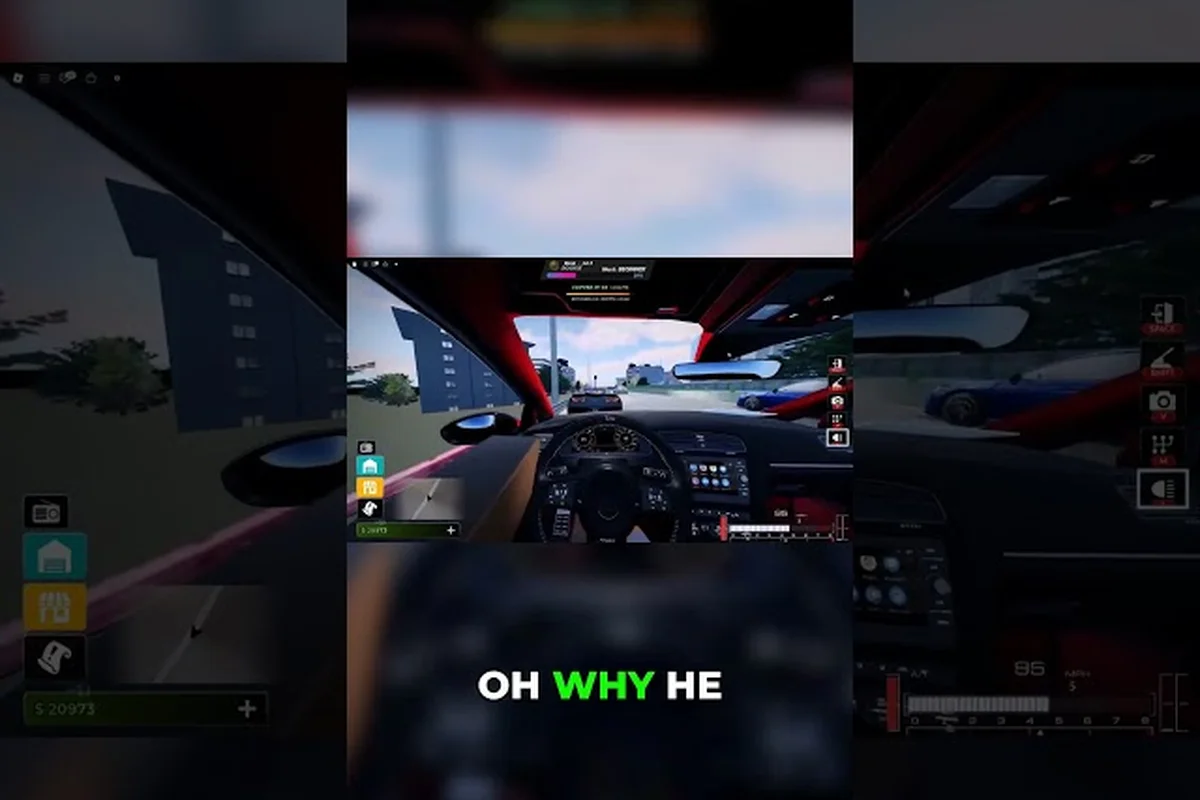
Learning how to drift in Ghost Driver is the single fastest way to turn chaotic highway traffic into a rhythm game, and this ghost driver drift guide breaks down every mechanic you need to chain clean slides. Because the game rewards aggressive traffic cutting over cautious lane changes, mastering the handbrake drift transforms both your score potential and your survival rate. By the end, you will know exactly when to tap Shift, how to read traffic gaps, and which techniques separate casual drivers from highway legends. By the end, you will know exactly when to tap Shift, how to read traffic gaps, and which techniques separate casual drivers from highway legends—and once you have that baseline, you can push your ghost-traffic reads further with our Ghost Driver How To Play Guide, which breaks down the exact timing windows for those trickier multi-lane merges.
Learning to Drift: The Ghost Driver Control Basics
Before you can chain slides through rush hour, you need to understand the foundation of every drift in this Roblox experience. The controls are simple on paper, but the timing behind them takes deliberate practice. According to the official Ghost Driver page on Roblox, the game uses W/A/S/D or Arrow Keys for steering, Shift for the handbrake and drift initiation, V to switch cameras, and L for headlights. That handbrake input is the heart of the entire ghost driver drift tutorial, because it determines whether you slide smoothly or spin out into a barrier.
The core loop works like this: you approach a traffic gap at speed, tap Shift while turning into the opening, and let the rear wheels break traction. The car rotates around its front wheels while you feather the throttle to maintain momentum. What makes Ghost Driver different from arcade racers is that the drift does not auto-correct — you hold the slide with steering input and counter-steer to straighten out. Community reports from the game's early access period suggest that most new players fail because they hold Shift too long, which kills speed and leaves them stranded in the middle of the highway.
Understanding Traction and Weight Transfer
Every car in Ghost Driver has its own traction profile, which means the same drift technique will feel different depending on what you drive. Heavier vehicles carry more momentum into a slide but require earlier counter-steering, while lighter cars snap into drifts almost instantly. The traction loss point is the exact speed where your rear tires stop gripping, and finding that threshold for your current vehicle is the first step toward consistent slides. Because the game is still in pre-alpha, the developer Tilted Vehicles continues to tune these values, so what works today may shift slightly with future patches.
The Role of Camera Perspective
Switching to first-person with V changes how you perceive drift angles, and many experienced players report that the hood camera makes it easier to judge gap distances. The default chase camera gives you a wider view of traffic but can hide how much angle you have built up. Try both perspectives during your ghost driver drift practice sessions, because the camera that feels natural in a straight line may not work when you are sideways at 120 mph. Most top drivers stick with the chase cam for traffic reading, then switch to first-person for precision slides through tight gaps.
Ghost Driver How to Drift: Step-by-Step Initiation
Now that the controls are clear, this section of the ghost driver drifting guide walks through the actual drift initiation sequence. The process breaks down into four distinct phases, and rushing any of them causes the slide to fail. Players who master this sequence report cutting their crash rate by more than half within a few sessions, according to community feedback on early gameplay videos.
| Phase | Input | Timing Window | Common Mistake |
|---|---|---|---|
| Approach | Straighten wheels before the gap | 1-2 seconds before entry | Turning too early |
| Initiation | Tap Shift + turn into the gap | As front wheels reach the gap | Holding Shift too long |
| Sustain | Feather throttle, hold steering | Until the car is 60% through | Lifting off throttle completely |
| Exit | Counter-steer, release Shift | When the rear aligns with the lane | Over-correcting into traffic |
The initiation tap is shorter than most players expect — a quick press of Shift, not a sustained hold. When you enter the gap, the car should rotate about 30 to 45 degrees, which is enough angle to clear the gap without losing excessive speed. If you find yourself spinning out, you are either tapping Shift too late or holding it too long. Practice the sequence at moderate speed first, because the timing window shrinks dramatically as your velocity increases.
Spotting Traffic Gaps Early for Drift Chains
Successful drifting in Ghost Driver is 70 percent anticipation and 30 percent execution. Before you initiate a slide, you need to identify which gaps are actually driftable. A driftable gap has at least one and a half car lengths of space, with clear pavement on the exit side. Gaps that require immediate braking after entry are traps, because you will carry too much speed into the next obstacle. Scan two to three cars ahead and plan your line through the entire sequence, not just the immediate opening.
Speed Management During the Slide
Speed is the currency of Ghost Driver, but raw velocity without control leads to crashes. The optimal drift speed sits between 80 and 110 mph for most vehicles, depending on the car's handling stats. Below that range, the car does not rotate enough to clear tight gaps; above it, the slide becomes unpredictable and hard to correct. Feather the throttle during the slide to maintain that band, and resist the urge to floor it on exit until the wheels are straight. This speed discipline is what separates drivers who chain five slides from those who crash after the first.
Ghost Driver Drift Controls and Settings for Better Slides
Your ghost driver drift controls setup can make or break your consistency, and this section covers the adjustments that experienced players recommend. While the default keybinds work fine, small tweaks to your settings can improve your reaction time and reduce input errors. The game currently offers limited customization, but the options that exist matter more than most players realize.
| Setting | Default | Recommended | Why It Helps |
|---|---|---|---|
| Camera | Chase | Chase or First-Person | First-person improves gap judgment |
| Handbrake | Shift | Shift (keep) | Muscle memory for drift initiation |
| Headlights | L | L (keep) | Night visibility without menu fiddling |
| Camera Sensitivity | Medium | High | Faster traffic scanning at speed |
The camera sensitivity setting is the most underrated adjustment in the game. A higher sensitivity lets you flick your view between traffic gaps faster, which matters when you are threading through heavy highway traffic at top speed. Community testing suggests that players who raise sensitivity by one or two notches report fewer missed gap reads, though the exact value comes down to personal preference. If you feel like you are reacting a beat too slow to traffic changes, try increasing this setting before changing your driving style.
Keyboard vs. Controller Considerations
Ghost Driver is primarily a keyboard game, but some players report success with controllers. The analog steering of a controller allows for finer drift angle control, while the keyboard's binary inputs make initiation more predictable. If you are struggling with over-rotation on keyboard, try tapping Shift in shorter bursts rather than holding it. If you are under-rotating on controller, you may need to commit to the slide more aggressively. Either way, the ghost driver drift tutorial principles stay the same — only the input precision changes.
Optimizing Your Field of View
The field of view setting directly impacts how much traffic you can see at once, and a wider FOV gives you more reaction time. While the game does not currently expose a dedicated FOV slider, switching to first-person mode effectively narrows your peripheral vision, which can help you focus on the gap ahead. Some players report that alternating between chase cam for general driving and first-person for tight sections works better than committing to one perspective. Experiment during your practice runs to find the combination that feels most natural.
Ghost Driver Drift Tips: Advanced Techniques for Highway Dominance
This section of the ghost driver drift guide covers the advanced techniques that turn competent drifters into highway legends. These moves require practice, but they dramatically increase your scoring potential and style points. According to player reports from the game's early access period, mastering these techniques is the difference between surviving traffic and dominating it.
-
Chain Drifting: Link multiple slides in sequence without straightening fully between them. The key is to keep the car slightly angled on exit, so the next initiation requires less rotation. This technique maintains speed through consecutive gaps and looks incredible in replays.
-
Brake Tap Drift: A light tap of the brake before Shift initiation to shift weight onto the front wheels. This gives you sharper rotation at lower speeds, which helps in tight traffic where a full drift would carry too much momentum.
-
Wall Rub Slide: Use the highway barriers to scrub off excess speed during a drift. This technique sacrifices a little style for a lot of safety, especially when you enter a gap too hot and need to bleed velocity before the next obstacle.
-
Counter-Steer Recovery: When the rear steps out too far, quickly steer into the slide direction to catch the car. This recovery move is essential for saving a drift that starts to spin, and it becomes second nature with practice.
The chain drift is the most valuable technique to learn because it directly increases your score multiplier. Each consecutive slide within a short window builds your combo, and the multiplier caps out at a level that rewards aggressive play. However, the risk-reward tradeoff is steep — a crash during a long chain resets your multiplier entirely. Weigh the potential score gain against the probability of a traffic collision before committing to a high-risk chain through dense traffic.
Drift Timing Through Different Traffic Densities
Traffic density in Ghost Driver varies as you progress, and your drift timing must adapt accordingly. In light traffic, you have the luxury of initiating drifts early and carrying maximum speed through wide gaps. In heavy traffic, the timing window shrinks and you must initiate later, using sharper angles to fit through tighter openings. The density adaptation skill is what separates players who can handle any traffic condition from those who only excel in one. Practice in both extremes during your sessions, because the game will throw both at you without warning.
Building Drift Confidence Through Progressive Practice
Jumping straight into max-speed highway runs is a recipe for frustration. Instead, build your drift confidence progressively, starting with moderate speeds and simple gaps before pushing your limits. The progressive practice method involves three stages: first, master single drifts at 60 mph; second, chain two to three drifts at 80 mph; third, attempt full-speed runs through heavy traffic. Each stage builds muscle memory that carries into the next, and players who follow this progression report faster improvement than those who brute-force their way through crashes.
Ghost Driver Drift Practice Routines and Common Mistakes
Even with the right techniques, you will hit plateaus and frustrating crash streaks. This section of the ghost driver drifting guide covers structured practice routines and the most common mistakes that hold players back. According to community data from the game's early access period, most drivers plateau because they repeat the same error without diagnosing the root cause.
| Mistake | Symptom | Fix |
|---|---|---|
| Holding Shift too long | Spinning out on exit | Tap Shift, release quickly |
| Initiating too early | Missing the gap entirely | Wait until front wheels reach the opening |
| No counter-steering | Car spins after slide | Steer into the slide direction on exit |
| Braking mid-drift | Losing all momentum | Feather throttle instead of braking |
The over-initiation problem is the most common issue reported by new players. They approach a gap, tap Shift, and the car rotates too far, sending them into the barrier on the far side. The fix is counter-intuitive: initiate the drift later, not earlier. When you wait until the front wheels are nearly at the gap, the car has less time to rotate before you need to straighten out. This tighter timing window feels risky at first, but it produces cleaner slides that carry more speed.
Structured Practice Routine for Consistent Drifts
A structured practice routine beats random highway runs every time. Start each session with five minutes of warm-up drifts at moderate speed, focusing on clean initiations and exits. Then spend ten minutes on chain drifting through light traffic, pushing your combo count higher with each run. Finish with five minutes of heavy-traffic practice, accepting that you will crash more often but learning the timing windows that matter. This structured session format builds consistency faster than hour-long free runs, because each phase targets a specific skill.
Tracking Your Progress and Adjusting
Keep a mental note of which techniques cause crashes and which feel natural, because the data from your own sessions is the most valuable feedback you have. If you consistently crash on the same type of gap, that is a signal to slow down and analyze your approach. The self-diagnosis habit — asking what went wrong after every crash — accelerates improvement more than any guide can. Over time, you will build an internal library of traffic patterns and drift responses that makes highway cutting feel automatic.
Frequently Asked Questions
What is the best way to learn how to drift in Ghost Driver?
Start at moderate speed around 60 mph and practice single drifts through wide gaps before attempting chains. Tap Shift briefly while turning, then counter-steer on exit to straighten the car. Focus on clean slides over speed, because consistency builds the muscle memory you need for faster runs.
Why do I spin out when I try to drift?
Spinning out usually means you are holding Shift too long or failing to counter-steer on exit. Tap Shift briefly to initiate the slide, then release it and feather the throttle. When the rear steps out, steer into the slide direction to catch the car before it rotates too far.
Does the car choice affect drift performance?
Yes, heavier vehicles carry more momentum into slides but require earlier counter-steering, while lighter cars rotate faster and are easier to control. Test different vehicles during your ghost driver drift practice to find one that matches your driving style. The best drift car is the one you can control consistently.
Should I use first-person or chase camera for drifting?
Chase camera gives you a wider view of traffic, which helps with gap reading, while first-person makes it easier to judge drift angles. Many experienced players switch between them depending on the situation. Try both during practice and use whichever feels more natural for your current driving conditions.
How do I chain multiple drifts together?
Keep the car slightly angled on exit instead of straightening fully, which reduces the rotation needed for the next initiation. Maintain speed through the transition and initiate the next drift as you approach the following gap. Chain drifting takes practice, but it significantly increases your score multiplier.