
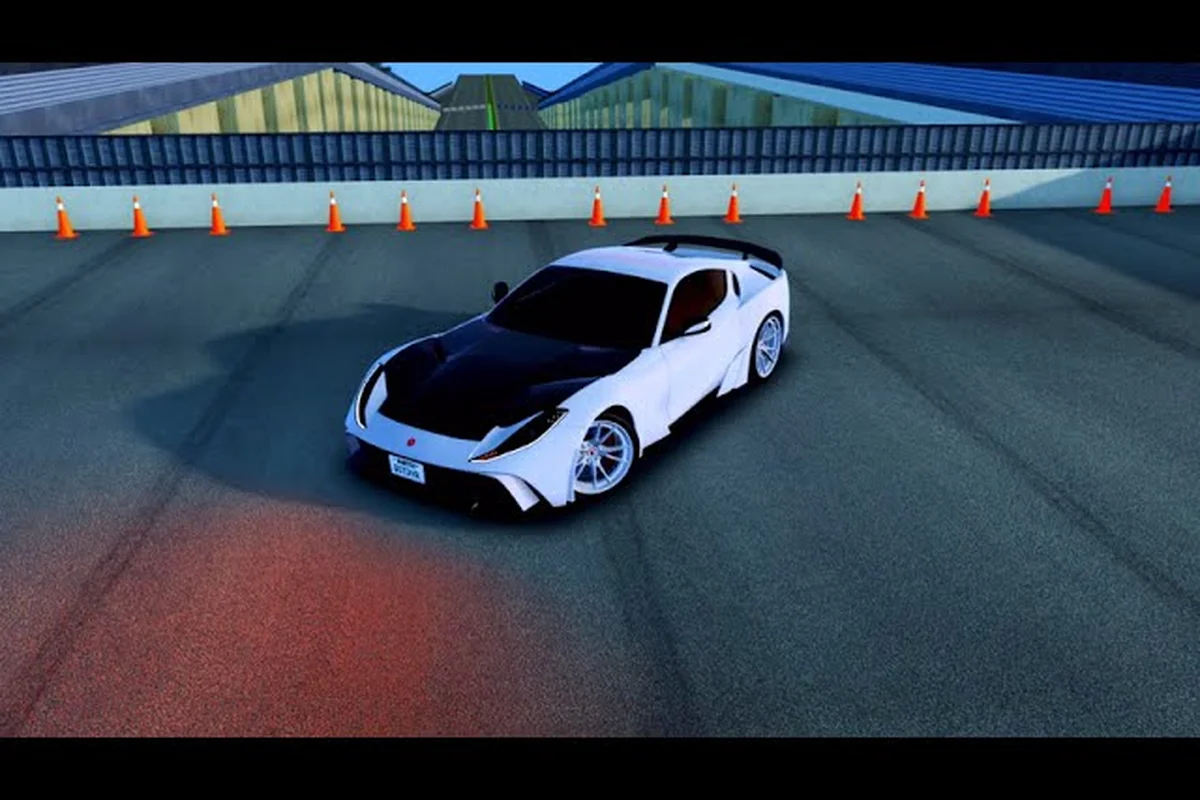
If you have been weaving through highway traffic in Ghost Driver and watching your car snap into a wall instead of sliding cleanly past a semi, you already know that drifting is not just about mashing the handbrake. The ghost driver drift techniques guide below breaks down the exact counter-steer angles, throttle windows, and practice routines that separate smooth traffic cutters from players who spend more time respawning than scoring. Because the game is still in PRE-ALPHA with roughly 901,000 visits and an active player base hovering around 3,400 online at peak times, learning these fundamentals now gives you a serious head start before the meta settles. Once you’ve nailed the basics of positioning and map awareness, the next step is translating that precision into high-speed control—check out our Ghost Driver Drift Zone guide to master the exact drift techniques that separate consistent lap leaders from the pack in these early lobbies.
Drift Fundamentals: How the Physics Work
Before you can chain slides through heavy traffic, you need to understand how Ghost Driver actually simulates weight transfer and tire grip. The game runs on a lightweight arcade physics model that rewards deliberate inputs rather than frantic steering, which means every drift starts with a setup phase that most beginners skip entirely. According to the official Ghost Driver Roblox page, the core controls are W/A/S/D or Arrow Keys for driving, V to switch camera angles, Shift for handbrake and drift, and L for headlights — but knowing the buttons is only the first layer of the ghost driver drifting skill tree.
The real foundation of every clean slide is the entry speed window, which sits between 60 and 90 percent of your car's top speed depending on the vehicle you own. Entering a corner too fast causes the rear tires to lose grip before you have steering authority, while entering too slow means the handbrake just slows you down without initiating a proper slide. Community testing from early Ghost Driver sessions suggests that most players find their sweet spot around 75 percent throttle when approaching a highway merge or a sharp interchange ramp, and that number becomes your baseline for every corner you attack.
Reading Traffic Gaps Before You Commit
The most overlooked part of ghost driver drift is the pre-drift scan that happens two to three seconds before you actually pull the handbrake. You need to identify not just the gap you are aiming for, but the movement patterns of the vehicles around it, because a semi truck changing lanes mid-drift will ruin your line even if your technique is flawless. Experienced players report scanning three lanes ahead and tracking at least two vehicles simultaneously, which gives you enough reaction time to abort a drift and straighten out if the gap closes unexpectedly.
Your drift commitment point is the moment when you decide that the slide is happening no matter what, and it should always be at least one car length before the gap you are targeting. Hesitation at this stage causes the most common beginner error: half-initiated drifts where the car straightens mid-corner and plows into the vehicle you were trying to avoid. The fix is simple — commit fully to every drift you start, because a clean slide through a tight gap is always safer than a panicked correction at the last second.
The Shift Key and Throttle Relationship
The ghost driver handbrake is not an on-off switch, even though the game only gives you one button for it. Holding Shift for the full duration of a corner kills your momentum and leaves you stuck in a low-speed spin, while tapping it for just a fraction of a second initiates the slide without sacrificing your exit speed. The technique that works best for most players is a quick tap-and-release on Shift while simultaneously counter-steering into the slide, then modulating throttle to hold the angle through the corner's apex.
Your throttle position during the slide determines whether you maintain, tighten, or widen your drift angle, and this is where the ghost driver drift practice tips start to matter. If you find yourself spinning out, you are holding too much throttle; if the car straightens before you reach the gap, you are not giving it enough. The ideal balance is roughly 60 to 70 percent throttle through the middle of the corner, with a smooth roll-on to full throttle only after you have passed the apex and can see your exit line clearly.
Counter-Steer Angle and Cornering Techniques
| Control | Key / Input | Primary Use | Drift Technique |
|---|---|---|---|
| Drive | W/A/S/D or Arrow Keys | Accelerate, steer, brake | Feather throttle mid-corner to hold drift angle |
| Handbrake / Drift | Shift | Initiate oversteer | Tap Shift before the apex, hold to extend slide |
| Camera | V | Toggle first-person / chase view | First-person helps read tight traffic gaps |
| Headlights | L | Night visibility | Keep on during highway cuts to spot gaps earlier |
Counter-steering is the single most important skill in this game, and it is also the one that most new players get completely backwards. When your rear end starts sliding out to the right, your instinct says to turn right to follow it, but the correct input is actually a quick left turn to catch the slide and keep the car pointed where you want to go. The ghost driver cornering technique requires you to fight that instinct every single time, which is why it takes deliberate practice rather than just playing the game normally.
The counter-steer angle you need depends entirely on how much the rear of the car has rotated when you initiate the drift. A small slide of 10 to 15 degrees needs only a gentle counter-steer, while a full 45-degree rotation requires you to crank the wheel hard in the opposite direction and hold it until the car stabilizes. The table below breaks down the angle ranges and the steering inputs that match them, based on community testing across multiple Ghost Driver sessions:
| Drift Rotation Angle | Counter-Steer Input | Throttle Position | Typical Use Case |
|---|---|---|---|
| 10-15 degrees | Gentle opposite input | 70-80 percent | Lane change slides |
| 20-30 degrees | Moderate opposite hold | 60-70 percent | Highway merge corners |
| 35-45 degrees | Full opposite lock | 50-60 percent | Sharp interchange ramps |
| 45+ degrees | Full lock + throttle lift | 30-50 percent | Emergency avoidance |
Throttle Lift and Weight Transfer
The weight transfer moment happens the instant you release throttle and pull the handbrake, because the car's weight shifts forward and unloads the rear tires. This is what actually initiates the slide — the handbrake locks the rear wheels, but the weight transfer is what breaks traction in the first place. If you pull the handbrake while still at full throttle, the car just spins because there is no forward weight bias to stabilize the rear end.
Your throttle lift timing should happen about half a second before you tap Shift, which gives the suspension time to settle and the weight to shift forward. Players who master this sequence report that their drifts feel dramatically more controllable, because the car is already in a stable rotation before the rear wheels lock up. The full initiation sequence is: lift throttle, tap Shift, counter-steer, then roll back into throttle as the slide angle stabilizes.
Cornering Lines for Traffic Cutting
The best ghost driver cornering line in this game is almost never the geometric ideal line you would use on a race track, because you are dodging moving vehicles rather than hitting apexes. Instead, you want to enter wide, cut sharply toward the gap, and exit with enough angle to immediately set up your next slide. This late apex approach keeps your speed higher through the corner and gives you more options if a vehicle changes position mid-slide.
For tighter highway sections where the gaps are smaller, you need to switch to a short slide technique that prioritizes quick direction changes over sustained drift angles. This involves tapping the handbrake for just a fraction of a second, flicking the car sideways, and immediately counter-steering to straighten out. The whole maneuver takes less than a second, but it lets you change lanes while maintaining most of your speed, which is essential for the higher difficulty traffic patterns.
Drift Practice Drills and Training Routines
You cannot learn to drift in Ghost Driver by just playing the game normally, because the traffic patterns are too unpredictable to give you consistent practice conditions. Instead, you need structured ghost driver drift practice tips that isolate specific skills and let you repeat them until they become muscle memory. The drills below are designed to be run in the empty sections of the highway or in the dealership test area before you start a real run.
The entry speed drill focuses on finding your car's ideal drift initiation speed. Start by driving at a constant 50 percent throttle, tap the handbrake, and note how the car responds. Then repeat at 60, 70, 80, and 90 percent throttle, paying attention to how the slide angle and stability change at each speed. This drill takes about ten minutes and gives you a reference point for every corner you will encounter in actual traffic.
The Counter-Steer Reflex Drill
This drill trains your brain to counter-steer automatically, which is the difference between players who drift consistently and players who spin out every other corner. Find a straight, empty section of highway, initiate a drift at moderate speed, and focus entirely on the counter-steer input rather than where the car is going. Hold the drift for as long as you can, then straighten out and repeat.
The goal is to reach a point where your hands automatically counter-steer the moment you feel the rear end step out, without any conscious thought. Most players need about 20 to 30 repetitions before this reflex starts to develop, and another 50 to 100 before it becomes truly automatic. The drift hold time is your metric here — try to extend it by one second each session until you can hold a controlled slide for five seconds or more.
Gap Selection Practice
Once you have the basic drift mechanics down, you need to practice reading and committing to traffic gaps. This drill involves driving through the highway at moderate speed and calling out your gap selection out loud before you commit to it, which forces your brain to process the traffic pattern consciously rather than reacting impulsively. Start with wide gaps and gradually work toward tighter ones as your confidence grows.
The commitment timer is a useful tool for this drill — give yourself exactly one second from when you identify a gap to when you initiate the drift. This prevents the hesitation problem that causes most failed gap cuts, and it trains you to make decisions quickly under pressure. As you improve, reduce the timer to half a second, which matches the reaction speed you need for the densest traffic sections.
Drift Car Selection and Handling Differences
Not every car in Ghost Driver handles the same way, and choosing the right vehicle for your drifting style can make a huge difference in how quickly you improve. The current PRE-ALPHA build has a small but growing garage, and each car has distinct drift handling characteristics that affect how it responds to your inputs. The table below compares the current vehicles based on community testing and reported player experiences:
| Car Type | Drift Stability | Initiation Ease | Speed Retention | Best For |
|---|---|---|---|---|
| Starter Sedan | Moderate | Easy | Low | Learning fundamentals |
| Sports Coupe | High | Moderate | High | Sustained drifts |
| Muscle Car | Low | Very Easy | Moderate | Short slides and flicks |
| Tuner Hatch | Very High | Hard | Very High | Precision cornering |
The starter sedan is actually the best car for learning the ghost driver drift techniques guide fundamentals, because its moderate stability and easy initiation give you a forgiving platform to practice on. Its low speed retention means you have to work harder to maintain momentum, which forces you to learn proper throttle control rather than relying on raw power to carry you through corners.
Understanding Drift Stability Ratings
The drift stability rating on each car tells you how much the vehicle resists spinning out once you initiate a slide. Higher stability cars like the tuner hatch are more forgiving of over-correction, but they also require more aggressive inputs to initiate the drift in the first place. Lower stability cars like the muscle car snap into slides instantly but are much harder to hold at a consistent angle.
Your choice should match your current skill level and your preferred driving style. If you are still learning the basics, the starter sedan or sports coupe gives you the best balance of forgiveness and performance. If you already have solid drift fundamentals and want to push your speed higher, the tuner hatch rewards precise inputs with the best speed retention in the game.
Setting Up Your Car for Drifting
While Ghost Driver does not have a full tuning system yet, there are a few adjustments you can make through your driving style that effectively change how your car handles. The throttle application curve is the most important one — some players prefer to snap the throttle on and off aggressively, while others use a smoother roll-on that keeps the car more stable. Experiment with both approaches and find the one that matches your natural driving rhythm.
The camera angle also plays a significant role in your drift performance, because it affects how well you can read the car's rotation and the traffic around you. The hood camera gives you the best sense of the car's angle, while the chase camera makes it easier to see traffic gaps ahead. Many experienced players switch between cameras depending on the situation, using the hood view for technical sections and the chase view for open highway stretches.
Advanced Drift Chains and Traffic Flow Strategies
Once you have mastered single drifts, the next level is chaining multiple slides together into a continuous flow through heavy traffic. This is where the ghost driver drift techniques guide moves from basic mechanics into advanced strategy, because you are no longer thinking about individual corners but about the entire highway as a single connected line. The key is to plan your drift sequence two to three corners ahead, so that your exit from one slide naturally sets up your entry into the next.
The drift chain rhythm is the timing pattern between your slides, and it should be as smooth and consistent as possible. Each drift should flow into the next with minimal straight-line driving in between, because every moment you spend going straight is a moment you are not building score or making progress through traffic. Players who master this rhythm report that the game starts to feel almost like a dance, with the car flowing through gaps in a continuous motion.
Managing Speed Across Multiple Drifts
The biggest challenge in chaining drifts is managing your speed, because each slide bleeds off momentum and you need to rebuild it before the next corner. The speed recovery window is the short straight section between drifts where you can roll back to full throttle, and the best players use these windows aggressively. If you exit a drift too slowly, you will not have enough speed to initiate the next slide cleanly.
Your throttle management strategy should account for the fact that each drift costs you roughly 10 to 15 percent of your speed, depending on the angle and duration. If you are chaining three drifts in a row, you need to start with enough speed to absorb that loss, or find a straight section where you can rebuild momentum. This is why the fastest players are not necessarily the ones with the best drift technique — they are the ones who plan their speed usage across the entire run.
Traffic Flow Prediction
The advanced version of gap reading involves predicting not just where vehicles are now, but where they will be when you reach them. This traffic flow prediction skill takes time to develop, because it requires you to track multiple vehicles' speeds and trajectories simultaneously. The key insight is that most vehicles in Ghost Driver maintain relatively consistent speeds, which means you can project their positions forward and plan your drift line accordingly.
Start by focusing on the vehicles directly in your path and predicting their positions one second ahead. As you get better, extend your prediction window to two and then three seconds, which gives you enough time to plan multi-drift sequences through complex traffic patterns. The prediction horizon is the most advanced skill in this guide, and mastering it is what separates top-tier players from everyone else.
Frequently Asked Questions
How long does it take to learn Ghost Driver drift techniques?
Most players need about five to ten hours of focused practice to develop consistent drift control, and another twenty hours to chain drifts smoothly through heavy traffic. The learning curve depends heavily on your previous racing game experience, so players coming from other drift games often pick it up faster than complete beginners.
What is the best car for learning to drift in Ghost Driver?
The starter sedan is the best learning vehicle because its moderate stability and easy initiation give you a forgiving platform to practice the fundamentals. Its lower speed retention forces you to develop proper throttle control rather than relying on raw power, which builds better habits for when you switch to faster cars.
Why does my car spin out when I try to drift?
Spinning out usually means you are holding too much throttle during the slide, or you are not counter-steering enough to catch the rotation. Try reducing your throttle to around 60 percent through the corner and focus on making a deliberate counter-steer input the moment the rear end steps out.
Can I drift with keyboard controls or do I need a controller?
Keyboard controls work fine for drifting in Ghost Driver, and many top players use them exclusively. The key is to develop a rhythm with your Shift taps and throttle inputs, since you do not have analog control over either one. A controller gives you finer throttle control, but it is not required to drift well.
How do I practice drifting without crashing into traffic?
Use the empty sections of the highway or the dealership test area to run the practice drills from this guide before starting real runs. The entry speed drill and counter-steer reflex drill are both designed to be run in safe areas, and spending ten minutes on them before each session will improve your drift consistency dramatically.