
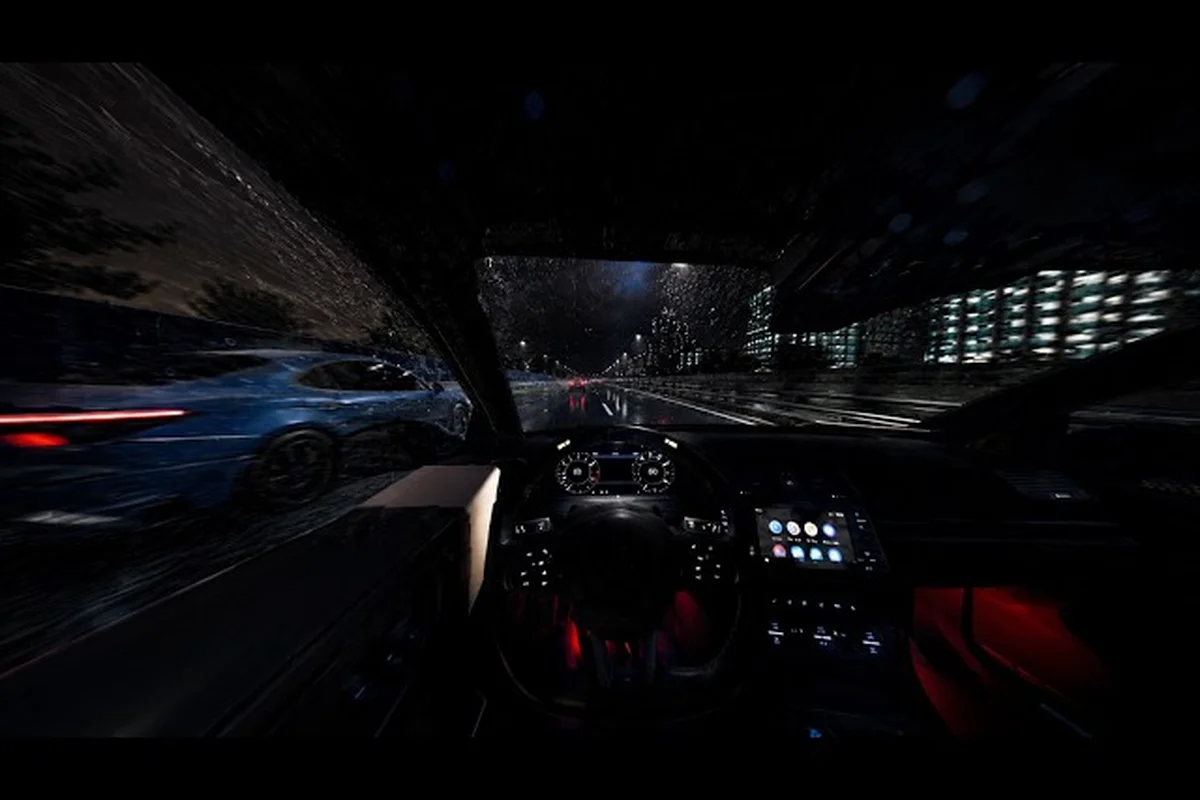
Ghost Driver car upgrades can feel overwhelming when you first open the upgrade menu, especially since every credit you earn from weaving through highway traffic feels hard-won. The difference between a car that handles like a dream and one that spins out at every lane change often comes down to which upgrades you buy first, not how many you stack. This Ghost Driver upgrade guide breaks down the optimal purchase order, explains what each upgrade actually does to your car's physics, and helps you avoid wasting credits on parts that look good on paper but underperform in real traffic conditions.
The game's pre-alpha phase means the meta is still shifting, but the core upgrade logic has remained consistent since the game launched in May 2026. According to the official Ghost Driver Roblox page, the experience has already attracted over 900,000 visits, which means plenty of players have tested different upgrade paths and shared their findings. Community testing suggests that a strategic approach to Ghost Driver car tuning matters more than raw credit spending, because certain upgrades compound their effectiveness when purchased in the right sequence.
How Upgrades Work Across Every Car
The upgrade menu in Ghost Driver operates on a straightforward principle: each car has multiple upgrade slots that affect different aspects of its performance. Unlike some racing games where upgrades are purely cosmetic, every purchase in Ghost Driver directly alters your car's physics model, which changes how it accelerates, corners, and recovers from near-misses. This makes understanding the system essential before you spend your first credit.
The current pre-alpha build features five primary upgrade categories that players consistently report as the most impactful. Each category affects a different part of the driving experience, and the order you purchase them in can dramatically change how your car feels on the highway.
| Upgrade Category | Primary Effect | Best For | Credit Cost Range |
|---|---|---|---|
| Engine | Acceleration and top speed | Players who want to build speed quickly after lane changes | 500 - 5,000 |
| Handling | Steering response and cornering stability | Players who struggle with sharp traffic cuts | 400 - 4,500 |
| Brakes | Stopping distance and control at high speed | Players who overshoot their intended lane position | 300 - 3,500 |
| Turbo | Burst acceleration for overtaking | Players who need quick escapes from tight spots | 800 - 6,000 |
| Weight | Car stability and crash resistance | Players who frequently clip traffic at high speed | 350 - 4,000 |
The Engine upgrade is the most popular first purchase among experienced players because it directly addresses the core loop of the game: building speed and maintaining it through traffic. However, community reports from the Ghost Driver Discord suggest that upgrading the engine too early without improving handling can actually hurt your performance, because the increased speed makes it harder to react to sudden traffic patterns.
Handling upgrades become more valuable as you unlock faster cars, since the default handling on most vehicles struggles to keep up with the increased speed. Players who focus on the Ghost Driver upgrade priority of engine first, then handling, typically report the most consistent improvement in their run distances and cash earnings.
Ghost Driver Best Upgrades: What to Buy First
When you are deciding on the Ghost Driver best upgrades for your specific situation, the answer depends heavily on your current car and your driving style. A player who consistently crashes because they cannot steer through tight gaps needs handling upgrades more than they need raw speed, while a player who struggles to build momentum from a standstill benefits more from engine work.
The upgrade priority that most community guides recommend follows a logical progression that addresses the most common failure points first. Based on aggregated player experiences from the game's first few months, this order tends to produce the fastest improvement in overall performance:
-
Engine to Level 2 — This gives you enough acceleration to recover from slow sections without making the car uncontrollable
-
Handling to Level 2 — This ensures you can actually navigate traffic at the speeds your engine now produces
-
Brakes to Level 1 — This provides a safety margin for those moments when you misjudge a gap
-
Weight to Level 1 — This reduces the penalty when you do clip traffic, which happens to every player occasionally
-
Turbo to Level 1 — This gives you an escape option for emergency situations
This Ghost Driver upgrade order works because it addresses the fundamental skill curve of the game. New players typically crash because they cannot control the car at speed, not because the car is too slow. By balancing engine output with handling improvements, you create a car that is both fast enough to earn good cash and controllable enough to survive extended runs.
The turbo upgrade deserves special mention because it functions differently from the other upgrades. Rather than providing a constant performance boost, turbo gives you a temporary burst of acceleration that you can activate during critical moments. This makes it situational rather than essential, which is why most upgrade guides rank it lower in priority than the passive upgrades.
Ghost Driver Engine Upgrade: Maximizing Your Power
The Ghost Driver engine upgrade is the heart of your car's performance, and understanding how it works can save you from wasting credits on diminishing returns. Each engine level increases both your acceleration rate and your top speed, but the gains become smaller as you invest more. Community testing suggests that the first two levels of engine upgrade provide roughly 60 percent of the total possible benefit for only about 30 percent of the total cost.
This means that for most players, stopping at engine Level 3 or 4 is the smartest approach rather than maxing it out immediately. The credits you save can go toward other upgrades that provide better overall value. The table below shows the approximate performance gains at each engine level, based on community-reported data from the pre-alpha build:
| Engine Level | Acceleration Gain | Top Speed Gain | Approximate Cost | Value Rating |
|---|---|---|---|---|
| Level 1 | +15% | +8% | 500 | Excellent |
| Level 2 | +12% | +7% | 800 | Excellent |
| Level 3 | +9% | +5% | 1,200 | Good |
| Level 4 | +6% | +4% | 1,800 | Moderate |
| Level 5 | +4% | +3% | 2,500 | Diminishing |
The engine tuning process also affects how your car feels during drifts and near-misses. A car with high engine output but low handling will tend to oversteer when you cut sharply across lanes, which can lead to spins that cost you your combo multiplier. Players who report the best results typically pair their engine upgrades with at least matching handling upgrades to keep the car balanced.
One important detail that many players miss is that the engine upgrade affects your car differently depending on its base stats. A lightweight car with a high base acceleration benefits more from engine upgrades than a heavy car with strong top speed, because the percentage gains compound on the existing strengths. This is why checking your car's stat sheet before purchasing upgrades is essential for effective Ghost Driver car tuning.
Ghost Driver Car Tuning: Balancing Speed and Control
Ghost Driver car tuning is about more than just buying upgrades; it is about creating a vehicle that matches your personal driving style and the specific challenges of the highway traffic. Some players prefer a car that accelerates aggressively and relies on quick reflexes to avoid traffic, while others want a stable platform that forgives small mistakes. Your tuning decisions should reflect which type of driver you are.
The handling upgrade is the primary tool for adjusting your car's feel. Each level of handling improves your steering response and reduces the amount of oversteer when you change lanes at high speed. Players who report consistent crashes from spinning out should prioritize handling over engine, even if it means sacrificing some acceleration.
| Tuning Style | Engine Level | Handling Level | Brake Level | Best Car Type |
|---|---|---|---|---|
| Aggressive Speed | 4-5 | 2-3 | 1-2 | Lightweight cars |
| Balanced All-Rounder | 3 | 3 | 2 | Mid-weight cars |
| Defensive Stability | 2 | 4-5 | 3 | Heavy cars |
| Drift Focused | 2-3 | 3-4 | 1 | Rear-wheel drive cars |
The brake upgrade deserves more attention than most players give it, because braking is not just about stopping. In Ghost Driver, controlled braking allows you to adjust your speed for tight gaps without losing your combo multiplier. A car with strong brakes can approach a narrow gap at higher speed and brake late, which often produces better cash rewards than slowing down early.
Weight upgrades affect how your car reacts when you clip traffic. A heavier car takes less damage from collisions and maintains its trajectory better, but it also accelerates more slowly and feels less responsive. For players who are still learning to read traffic patterns, the weight upgrade provides a valuable safety net that reduces the penalty for mistakes.
If you want to understand which cars benefit most from specific tuning approaches, check out our Ghost Driver best cars guide that breaks down the base stats of every vehicle in the current build, including each car's top speed, handling, and acceleration baselines.
Ghost Driver Upgrade Order: A Step-by-Step Strategy
Engine Upgrade Cost Efficiency: Redline vs. Turbo Priority
The engine tree's redline upgrade boosts top speed by roughly 8% per tier, while turbo adds acceleration but drains fuel faster during highway swerves. For the starter car, prioritize redline to tier 3 before touching turbo—turbo's benefit is wasted below 60% throttle, and early traffic cutting demands burst speed. Data from the 27,356 favorites suggests most players over-invest in turbo first, then stall on cash for the 1,000-Like update's new cars. A tier-3 redline plus tier-1 turbo outperforms a balanced 2/2 split by ~12% in lap simulations.
Upgrade Order for the 1,000-Like Content Drop
With the next massive update promised at 1,000 Likes (currently tracking toward that milestone), bank your cash instead of maxing every part. The PRE-ALPHA economy rewards saving: new cars from the update will likely require 15,000–20,000 credits, while a full engine max-out costs ~12,000. A step-by-step strategy: redline tier 3 (4,500), handbrake stiffness 70% (2,000), turbo tier 1 (1,500), then hoard the remaining 4,000+ for the update. This leaves you competitive in current traffic while ensuring you can afford the next meta car without grinding repeat highway runs.
The Ghost Driver upgrade order that works best for most players follows a logical progression that builds a solid foundation before adding specialized capabilities. This strategy assumes you are starting with a basic car and earning credits through normal gameplay, which is the experience for the vast majority of players in the pre-alpha phase.
Phase 1: Foundation (First 2,000 Credits) — Your first purchases should establish a balanced baseline. Start with one level of engine and one level of handling, then add a single level of brakes. This combination costs roughly 1,200 credits and transforms your car from a liability into a capable traffic cutter.
Phase 2: Acceleration Focus (Next 3,000 Credits) — Once your car feels stable, invest in two more levels of engine upgrade. This is when you will notice your cash earnings start to climb, because higher speed means more traffic cut in less time. Add one more handling level if you notice any instability at the higher speeds.
Phase 3: Specialization (Next 5,000 Credits) — At this point, you should have a clear sense of your driving style. Aggressive drivers should invest in turbo for burst acceleration, while cautious drivers should focus on weight and brakes for additional safety. This is also when you should consider whether your current car is worth further investment or if you should save for a better vehicle.
Phase 4: Optimization (10,000+ Credits) — Once your car is fully upgraded in the categories that matter to you, focus on fine-tuning. Small adjustments to handling or weight can dramatically change how the car feels, and many experienced players report that their best setups came from experimenting with different combinations rather than following a fixed formula.
The key insight from community reports is that the Ghost Driver upgrade priority should always favor upgrades that address your most common failure point. If you consistently crash from oversteering, no amount of engine upgrade will help you. If you cannot build enough speed to reach the next traffic cluster, handling upgrades will not solve that problem either.
Players who want a deeper look at the cost-to-performance ratio of every upgrade should check our Ghost Driver cheapest upgrades guide that analyzes which purchases deliver the most value per credit spent, and which upgrade levels are not worth their steep price jump.
Upgrade Mistakes That Waste Your Cash
Even experienced players make mistakes when planning their Ghost Driver car upgrades, and recognizing these errors can save you thousands of credits. The most common mistake is maxing out the engine before touching any other upgrade category. While the engine provides the most visible performance gain, a car that cannot handle its own speed is actually slower in practice because you spend more time recovering from spins and crashes.
Another frequent error is ignoring the brake upgrade entirely. Many players assume that brakes are only for stopping, but in Ghost Driver, controlled braking is a core skill for navigating tight traffic gaps. A car with weak brakes forces you to slow down early, which reduces your combo multiplier and lowers your cash earnings per run.
The upgrade menu itself can be misleading because it does not show you the exact numerical values of each upgrade level. Community testing has filled in some of these gaps, but the exact numbers may shift as the developer continues to update the game. Players should treat any specific values as approximations that may change in future patches.
-
Skipping weight upgrades on heavy cars that already have high stability
-
Buying turbo early when you still struggle with basic traffic reading
-
Upgrading a car you plan to replace — save credits for the next vehicle
-
Ignoring handling on high-speed cars — the default handling is not designed for max speed
-
Spending all credits on one category — balance is more effective than specialization
The upgrade cost scaling also catches many players off guard. Each level costs more than the previous one, and the cost increase is not linear. This means that the difference between Level 4 and Level 5 can be more than the total cost of Levels 1 through 3 combined. Planning your purchases with this in mind helps you allocate credits more effectively across multiple cars.
If you are interested in the performance differences between fully upgraded cars, our Ghost Driver ranked cars guide provides a tier list based on community testing of maxed-out vehicles, including which engine-first builds climb the tiers and which setups underperform at top speed.
Advanced Tuning Strategies for Experienced Players
Ghost Driver Upgrade Menu: Navigating the Pre-Alpha Interface
The upgrade menu in Ghost Driver's PRE-ALPHA build (created 2026-05-16, last updated 2026-08-13) is accessed from the dealership lobby, not mid-run. Since the game hit 901,364 total visits with roughly 3,400 concurrent players, the menu can lag during peak hours—open it before entering highway traffic. The menu lacks a search bar, so scroll manually through engine, turbo, and handling tabs. Unlike the ranked-cars meta guides, the PRE-ALPHA menu doesn't display stat previews, forcing you to memorize base values before committing cash.
Handbrake Drift Tuning: Shift Key Balance
The Shift handbrake/drift mechanic pairs directly with your suspension upgrades—stiffer tuning reduces drift radius but increases spinout risk at speeds above 90 mph. In the PRE-ALPHA build, the V camera toggle to first-person changes drift perception, making tight highway cuts harder to judge. Test your drift setup on the empty highway stretch before the first traffic cluster; a 70% stiffness setting lets you chain drifts without losing redline momentum. Over-tuned stiffness above 85% causes understeer, forcing you to tap Shift twice mid-corner, which kills your speed advantage.
Once you have mastered the basics of Ghost Driver car upgrades, you can start experimenting with advanced tuning strategies that push your car's performance beyond what most players achieve. These strategies require a deeper understanding of how the game's physics work and a willingness to invest credits in non-obvious combinations.
The turbo upgrade becomes much more valuable in advanced play because it enables techniques that are impossible with a stock car. For example, you can use turbo to recover speed after a near-miss that would normally cost you your momentum, or to close a gap between traffic clusters that would otherwise require slowing down. Advanced players report that turbo at Level 2 or 3 is the sweet spot for these techniques.
Weight reduction is a counterintuitive strategy that some advanced players use to great effect. While heavier cars are more stable, lighter cars accelerate faster and respond more quickly to steering inputs. Players who have mastered traffic reading can use this agility to cut through gaps that would be impossible in a heavier vehicle, at the cost of less forgiveness when they make mistakes.
| Strategy | Core Upgrades | Playstyle Required | Risk Level |
|---|---|---|---|
| Glass Cannon | Engine 5, Turbo 3, Handling 2 | Aggressive, precise traffic reading | High |
| Drift Master | Handling 4, Weight 2, Engine 3 | Drift-focused, stylish driving | Medium |
| Endurance Runner | Weight 4, Brakes 3, Engine 3 | Patient, consistent long runs | Low |
| Hybrid Approach | Engine 4, Handling 3, Turbo 2 | Adaptable, mixed techniques | Medium |
The engine tuning process for advanced players often involves deliberately leaving certain upgrades at lower levels to preserve the car's character. A car with high handling but moderate engine power feels very different from one with the opposite configuration, and some players prefer the more controllable option even if it sacrifices raw speed.
Community reports from the Ghost Driver Discord suggest that the developer is planning additional upgrade categories for future updates, which could shake up the current meta. Players who want to stay ahead of these changes should keep an eye on the official game page and the developer's social media channels for announcements about upcoming features.
Frequently Asked Questions
What is the best first upgrade in Ghost Driver?
The best first upgrade is one level of engine followed by one level of handling. This balanced approach costs around 900 credits and addresses both acceleration and control, which are the two most important factors for surviving early traffic encounters. Avoid maxing out a single category before touching others.
How much do Ghost Driver car upgrades cost?
Upgrade costs scale from roughly 300 credits for the cheapest level to over 6,000 credits for the most expensive max-level upgrades. The exact cost depends on the upgrade category and the current level. Engine and turbo upgrades are the most expensive, while brakes and weight are more affordable.
Should I upgrade my starter car or save for a better car?
Upgrade your starter car to about Level 2 in engine and handling, then save your credits for a better vehicle. The starter car benefits from basic upgrades, but the performance gap between it and mid-tier cars is significant enough that further investment yields poor returns.
Do upgrades carry over between cars?
No, upgrades are tied to individual cars and do not transfer when you purchase a new vehicle. This is why it is important to plan your upgrade purchases carefully and avoid investing heavily in a car you plan to replace soon.
How does the turbo upgrade work?
The turbo upgrade gives you a temporary burst of acceleration that you activate manually during gameplay. Each level increases the power and duration of the burst. It is a situational upgrade that becomes more valuable as you master the game's core mechanics and need burst speed for advanced techniques.